Do Genting Casino Sister Sites Offer the Same Games? How to Compare Their Libraries
An overlap in suppliers does not make two lobbies identical. The same developer can appear on both sister sites while each site displays a different mix of that developer’s games. Lobby layout, search functionality and the availability of free trials add further differences. For your own comparison, identify the games you play most, note their studios, and look for those studios in the lobby you are evaluating. Then search for a specific title and try the demo if one is offered. These steps take a few minutes and replace assumption with evidence.
See also:
- Why sister sites can share providers and still feel different
- genting casino sister sites: operator profile
- The four layers where game libraries actually diverge
- What to check in the lobby before signing up
- Using demo mode to test a game before staking money
- Matching the library to the way you play
- Common questions about game libraries on sister sites
- Playing within your limits
Why sister sites can share providers and still feel different
Shared suppliers, different shelves
Two sites can list the same software developer and still present very different catalogues. The provider is the factory, not the shop. What a player browses is the operator’s chosen selection: which studios are integrated at all, how deep the back catalogue goes, and whether a particular title is live for UK players. A site might carry a studio’s newest release while another carries that studio’s older, locally popular games. Neither is a fault. The decision is whether the specific titles you want are there, not whether the logo appears on a banner.
richy leo casino: checking offers, promo codes and mobile access
Exclusives sharpen this. A game built for one brand, or a variant held back from general distribution, will not appear simply because the underlying studio is shared. If a title matters to you, treat the logo as a weak signal and the title as the strong one.
Winbig21 Casino: The Procedure and What Happens to Your Balance
The lobby is the catalogue
Interface design decides how quickly you can find out. When the lobby groups games by developer, you can go directly to a studio and browse its line-up. A lobby organised only by game type, with a broad featured carousel, hides the same stock behind more taps. Search bars and filters change the practical answer even when the underlying inventory matches.
The shortcut worth resisting: judging a library by its promotional tiles. Those highlight what the operator wants played, not what it stocks. Use the full games menu or the studio filter instead. If you cannot locate a specific developer’s page at all, the catalogue is thinner than the front page suggests.
A short pause in one lobby tells you more than any comparison of provider lists.
Lemon Casino Login: Closing an Account and Losing Access on Purpose
genting casino sister sites: operator profile
Catalogue size alone rarely predicts enjoyment. The mix of classic reels against modern mechanics determines whether a library feels fresh or repetitive. Reviewing these categories helps you gauge if the variety suits your taste before signing up.
| Brand | Details |
|---|---|
| genting casino sister sites | Master agreements with 42 studios supply over 1,200 titles; individual brands display between 380 and 850. |
Scale sits in the shared supply chain, not the front page. Master licensing deals bring 42 providers into the group, producing a combined library past 1,200 titles. Any given brand trims this to a working lobby of about 380 to 850 games, which keeps navigation manageable. If you cannot find a title on one site, the fix is a different lobby, not a different provider list.
The four layers where game libraries actually diverge
The software roster and the exclusive layer
The first layer is the supplier list, and it is the least useful on its own. Two sites can both carry the same large studios and still give you noticeably different sessions, because the catalogue a studio licenses to a group is not a single fixed package. Shared suppliers tell you the core mechanics and volatility bands will look familiar. They do not tell you whether a particular title is present, or whether a newer release has been added at all.
Exclusives are where this layer separates. A group sometimes commissions a title from one developer and keeps it inside its own sites, which means a game you read about may be absent from the sister site you are considering. Read the game’s own information panel: it usually names the studio and sometimes carries the group’s branding. A studio logo with no group branding suggests a standard release rather than an exclusive, though the label is not proof of anything beyond how the game is presented.
Sections, filtering and the lobby you actually use
The second layer is structure. A library of several thousand titles is only as good as the lobby built around it. Look at whether the catalogue is split into meaningful sections: slots, live dealer tables, bingo, instant wins. On sister sites sharing a group, the split often varies while the underlying content does not, because the lobby is a design decision rather than a supply one. If you play mostly slots, a site that buries them behind a general arcade tab costs you time every session.
The more revealing test is how the lobby filters. Can you sort by provider inside the slots section, or search by title? A search box that recognises partial names makes a large library usable. A provider filter that lists each studio by name lets you compare sister sites in a few clicks rather than scrolling. Presentation matters too: how many rows load before the lobby stops showing more, and whether new releases sit in their own rail or disappear into the general list.
Two players with the same goal can rank these layers differently. If you follow specific studios, exclusive content and provider filtering decide it. If you play a handful of favourites, title search and lobby layout matter more. The layers are independent, so a site can win on suppliers and lose on structure.
What to check in the lobby before signing up
-
Begin with a game you already know and search for it by name. The result tells you immediately whether the lobby stocks that title or a close relative. From there, open the game page and read the developer credit; the studio behind the tile is the detail that lets you compare one sister site’s library against another’s, because shared suppliers can sit behind very different selections.
-
Use the provider filter as your inventory. Where a lobby exposes a list of software developers, scan it for the studios you trust. A familiar name with dozens of associated titles is a different offer from the same name with two or three, and the filter is the quickest place to see which situation applies.
-
Look at how the lobby is divided. Slots, live tables and bingo usually occupy separate tabs, and the depth of each section shows where the catalogue is concentrated. A site might carry a broad slots range while its live tables come from one provider, or the reverse.
-
Check whether the game appears in demo mode. A play-for-fun button confirms the title is loaded in the lobby and lets you test the mechanics before staking. It says nothing about the account conditions, limits or stakes attached to the paid version.
-
Note how the filters behave in practice. A provider filter that resets after every game, a search that needs exact spelling or categories hidden behind extra clicks all slow down the process of finding what you want. Spend a few minutes navigating before you commit.
-
Watch the difference between a headline total and the count inside your preferred category. A lobby advertising a vast library may hold a thin selection of the slots or live tables you actually play. Filter down to your category, count the distinct developers still visible, and compare that figure with the rival sister site. That narrower number is the one that decides whether the library suits you.
Using demo mode to test a game before staking money
What a demo mode actually is, and what it does not prove
A demo version loads the game’s mathematics and interface without drawing on your balance. That makes it the most direct way to test whether a title appears at all, how the reels, table layout or bonus rounds behave, and whether the pace suits you. The bet sizes in demo usually mirror the real-money settings, so the rhythm of stake adjustment carries across.
What demo cannot tell you is the payout behaviour of real play. The random number generator should serve both modes, but seeing a session play out on a demo screen gives no information about what a funded session will return. Treat it as a familiarisation tool, not a preview of results. It also does not confirm that a title will remain accessible once you register; availability can shift with your account status, region or the site’s catalogue.
Finding the demo and reading its limits
Demo access usually sits in the lobby rather than on a dedicated page. Open the game’s information panel or the tile menu; many titles offer a free-play option alongside the real-money launch button. If no such option appears, the title may be real-money only, or the demo may be restricted to certain regions or account types.
Before relying on demo, check two things. First, whether the free version uses the same rules as the funded one; some demos simplify bonus features or disable certain bet controls, so the experience differs from what you would play for money. Second, whether the demo resets your progress each time, which matters if you want to compare volatility across sessions. Use it to confirm the title is present and to learn its controls, then judge the real-money decision separately, with your budget and time limits already decided.
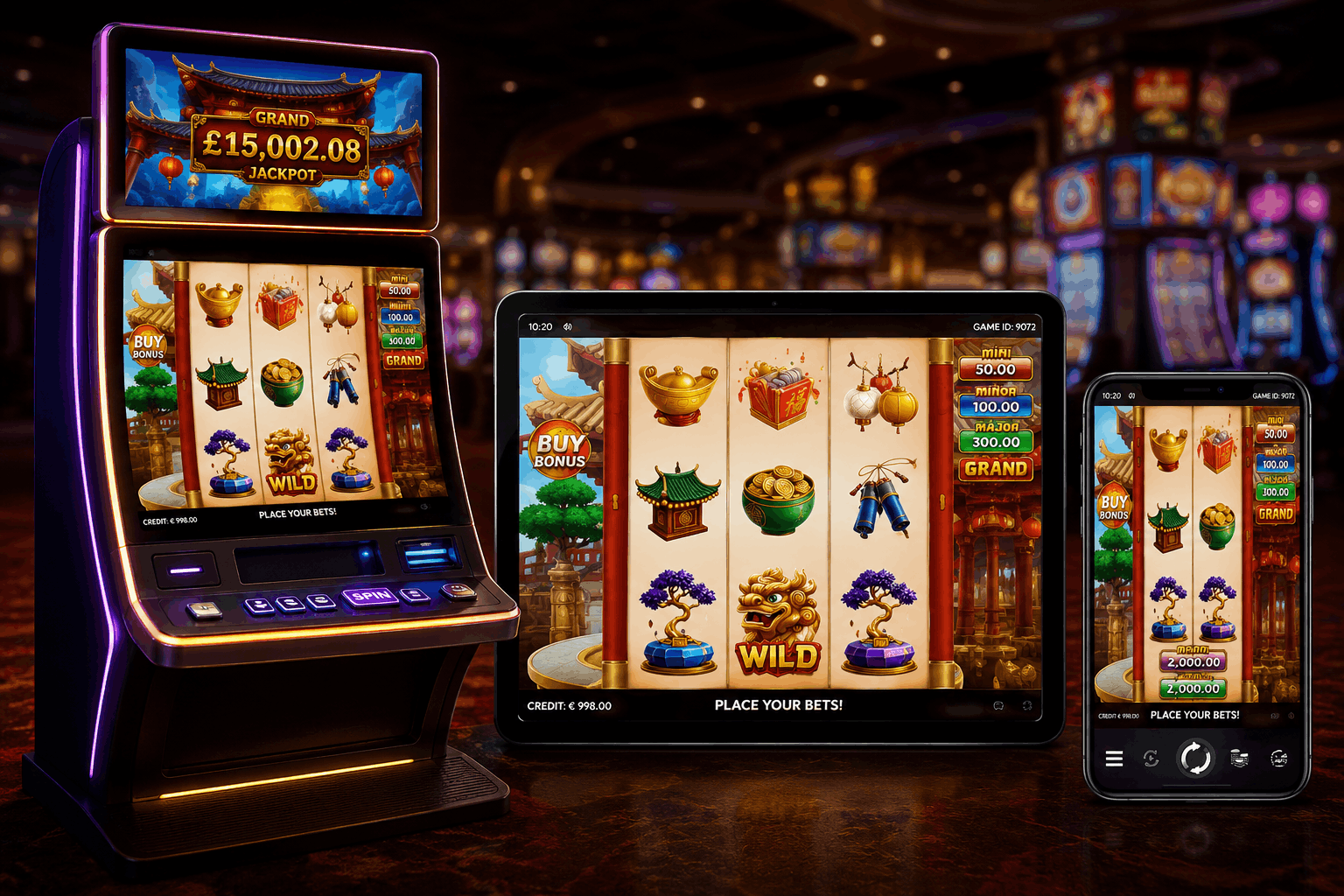
Matching the library to the way you play
Slots players need breadth, not just headline titles
A slots player is best served by a library that goes deep across volatility and mechanic, not one that merely repeats a long list of familiar titles. What matters is whether the lobby stocks the studios whose slot styles you keep coming back to, and whether you can open those games before placing any bet. Shared provider lists between genting casino sister sites can look near-identical on the surface; the practical difference for a slots player sits in exclusive releases and in how quickly the lobby surfaces them. If two sites run the same developers, pick the one whose navigation puts mechanics and studios within a couple of clicks, because friction in finding a game is the cost you pay repeatedly.
Bingo and live dealer players weigh a different set of features
Bingo and live dealer preferences pull in another direction. A bingo player wants rooms, schedules and a lobby that makes session times obvious; a live dealer player wants table variety, betting ranges and a clean stream interface. Neither need is answered by provider count alone, and a site heavy with slot studios may carry a thin live or bingo offering. Before you choose, open the lobby area that matters to you and confirm that the category you really play is stocked, that the tables or rooms match the stake level you prefer, and that the interface works properly on your device. Where a name you recognise appears, confirm by opening it rather than trusting the tile. The library that fits is the one whose strongest area matches your habit, and a site whose range sits in a mode you rarely touch offers little advantage.
Common questions about game libraries on sister sites
What happens if a game you usually play is missing on one genting casino sister site but not another?
Libraries genuinely differ between sister sites even when studios overlap. A title can be absent because of an exclusivity arrangement, a regional restriction or a lobby refresh that has not yet restored it. Treat each site as its own catalogue and search for the specific game there before assuming it is carried.
Can you still play the same game in demo mode if the sister site does not list it?
Demo access confirms only that a trial version opens in that lobby, not that real-money play is offered on the same site. Where a game is missing, the practical step is to play the demo on the site that does host it, or choose an alternative title stocked by the site you actually want to use.
A game stops mid-round before you confirmed a stake. What record matters for the library question?
If a round halts before acceptance, no confirmed wager exists and the lobby entry itself can explain why. Check the game history shown in your account and note the round’s status; an unconfirmed round is not a completed game, so do not treat it as proof the title is missing or withdrawn.
Playing within your limits
A limit only does its job if it is set before you are chasing a result. Deposits, session reminders and time-outs work as brakes precisely because they are decided in calm conditions, not in the middle of a losing run. Fix a spending ceiling you could lose without it changing anything else that week, then treat it as fixed. If the lobby comparison tempts you towards a game you have not tried, use demo play rather than staking money to find out whether you like it. Gambling is entertainment, not income. In the UK you must be 18 or over, the Gambling Commission regulates licensed sites, and GAMSTOP lets you self-exclude across operators. Support is available from GamCare and BeGambleAware, or the National Gambling Helpline on 0808 8020 133.
ladbrokes casino bonus: Offers, Codes and Conditions